
The insightful articles, inspiring narrations and analytical perspectives presented by the Editorial Team, establish an alluring connect with the reader. My compliments and best wishes to SP Guide Publications.
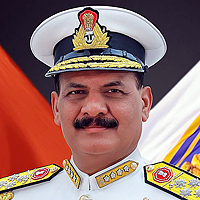
"Over the past 60 years, the growth of SP Guide Publications has mirrored the rising stature of Indian Navy. Its well-researched and informative magazines on Defence and Aerospace sector have served to shape an educated opinion of our military personnel, policy makers and the public alike. I wish SP's Publication team continued success, fair winds and following seas in all future endeavour!"

Since, its inception in 1964, SP Guide Publications has consistently demonstrated commitment to high-quality journalism in the aerospace and defence sectors, earning a well-deserved reputation as Asia's largest media house in this domain. I wish SP Guide Publications continued success in its pursuit of excellence.
With the flight trials of all six contending aircraft for India’s mammoth 126-aircraft programme, which are likely to be over by March-April this year the scene for the final selection is surely hotting up. In the race for the nearly $12 billion project are the US Boeing F-18 Super Hornet and Lockheed Martin F-16IN Super Viper, EADS Eurofighter Typhoon, the French Rafale, The Swedish SAAB JAS-39 Gripen and the Russian MiG-35 jet fighters all trying to outdo each other for the highly lucrative deal. But while a lot of heat is being generated for the ‘ultimate’ weapons platform, little thought appears to have been given on the acquisition of the weapons which will ultimately decide the overall effectiveness of the weapon system. On the other hand, it is quite possible that the requirement of specific weapons has been included in the detailed RFP sent earlier to the competing vendors. In either case however, the information is not available in the public domain.
A quick look at the competing platforms would reveal that five out of the six manufacturers of jet fighters belong to the western world with the sole exception from the erstwhile eastern bloc being the Russian MiG-35. Should the Russians win the fiercely competitive race, they would undoubtedly offer matching products from their own arsenal of air-to-air and air-to-surface weapon systems, most of which are already in the IAF’s inventory. But, in the event of a non-Russian aircraft coming first, what is emerging as the most interesting fact is that immaterial of which western aircraft is selected, the weapon systems on offer would essentially be the same. The only exception being in the BVR (Beyond Visual Range) category where the French are likely to offer the MICA omni-role air-to-air missile on the Rafale, compared to the remaining four western platforms with all of them already carrying the AMRAAM AIM-120 derivatives as their standard BVR missile.
The IAF, on its part, may want to adapt the Russian R-77, the ‘Amraamski’ BVR missile, on the ‘selected’ western aircraft because of its operational as well as cost-effectiveness. But, in the air-to-surface categories, the IAF must add to its existing arsenal by acquiring stand-off, precision-strike capabilities of the western weapons. AGM-65 Maverick, AGM-45 Shrike, AGM-84 Harpoon, AGM-154 JSOW (Joint Standoff Weapon), KEPD 350 Taurus, Brimstone and Stormshadow are some of the western weapons available in the above category. What is interesting to note is that all the above-stated, state-of-the-art, air-to-surface weapons are already integrated with each one of the western aircraft on offer for the MMRCA deal.
It is quite obvious that in the event of a so-called ‘western’ jet fighter being selected for the MMRCA project, the IAF will have tremendous flexibility in the selection of air-to-surface weapons - a choice, which, it must exercise to the fullest.